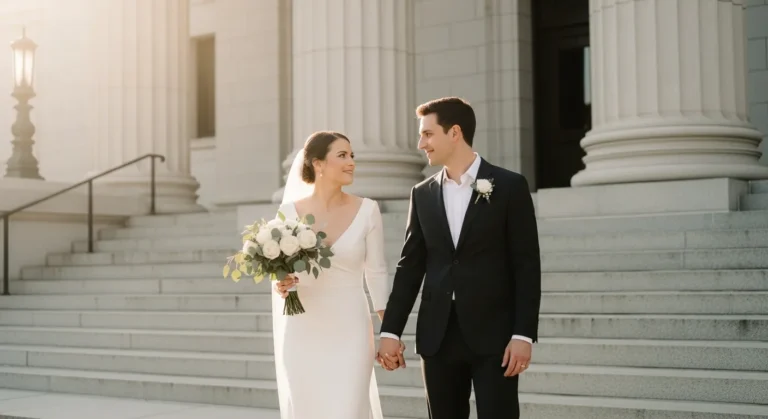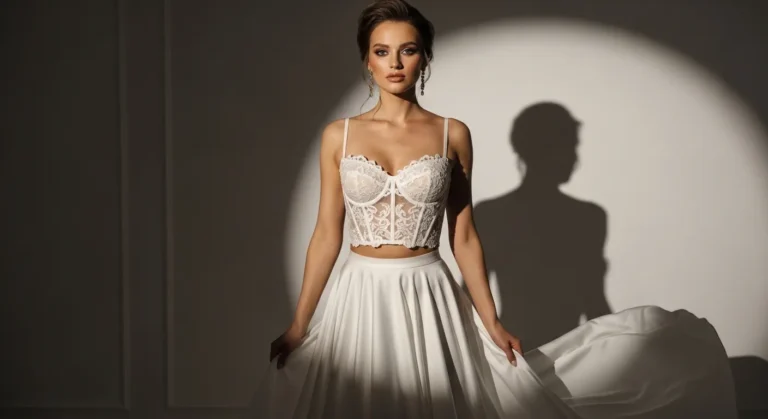
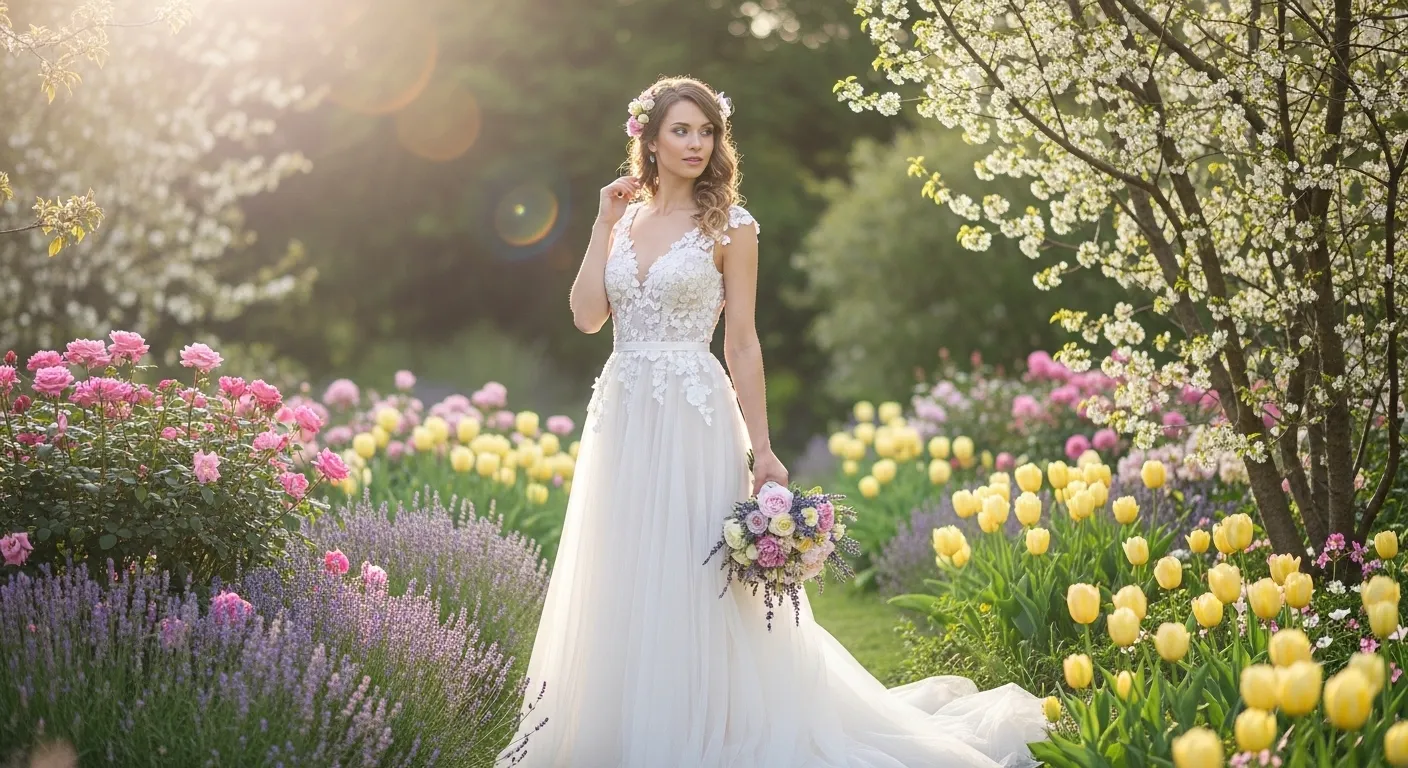
12 Spring Wedding Dresses That Feel Fresh and Romantic
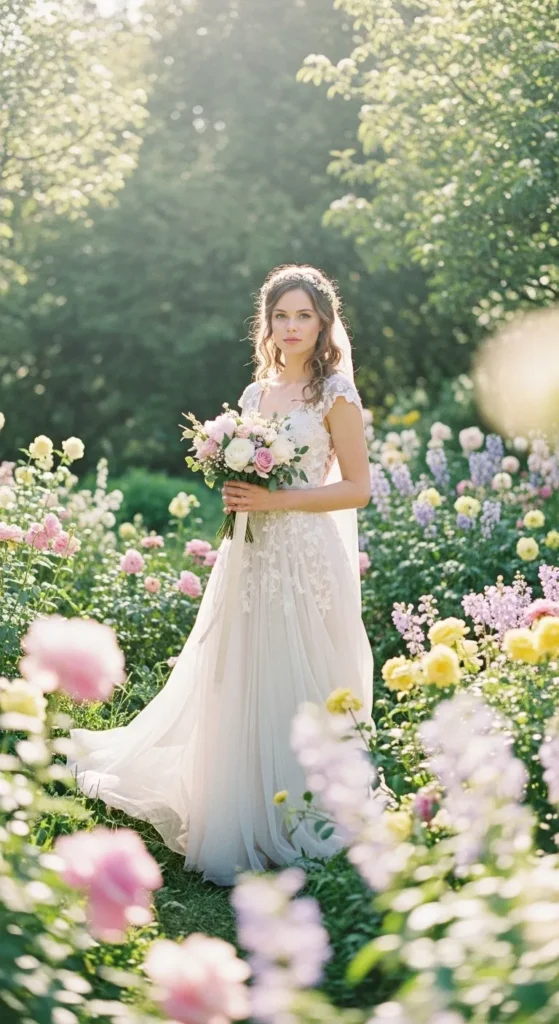
I have spent a significant amount of time thinking about what makes a spring wedding dress genuinely right — not just beautiful in the abstract, not just appropriate for the season, but right in that specific way that makes a bride look like the most complete version of herself rather than like someone wearing a bridal costume.
The answer, as far as I can tell, comes down to one quality: the dress should feel like it belongs to the day rather than simply arriving at it. A spring wedding has a specific atmosphere — soft light, blooming flowers, warm air with a quality of newness in it — and the most beautiful spring wedding dresses are the ones that connect to that atmosphere rather than exist separately from it. They move in spring light the way they were made to. They respond to a spring breeze the way they should. They look, in the photographs taken on that day, like they could not possibly have been worn anywhere else.
These 12 spring wedding dresses are the ones that achieve that quality most consistently — each for a different reason and each for a different kind of bride. Find the one that makes you feel most completely and most beautifully yourself. That is the right one.
1. The Floral Lace Wedding Dress
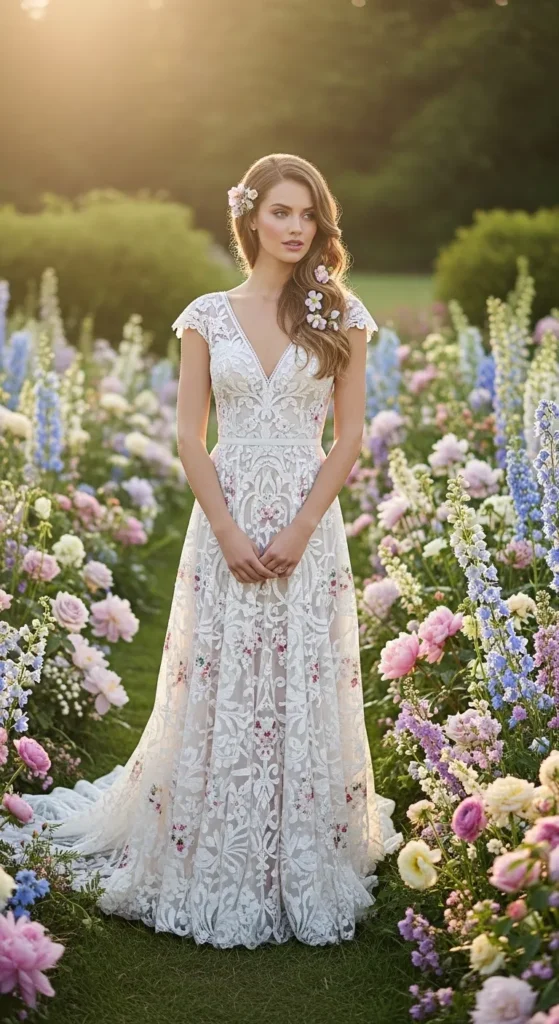
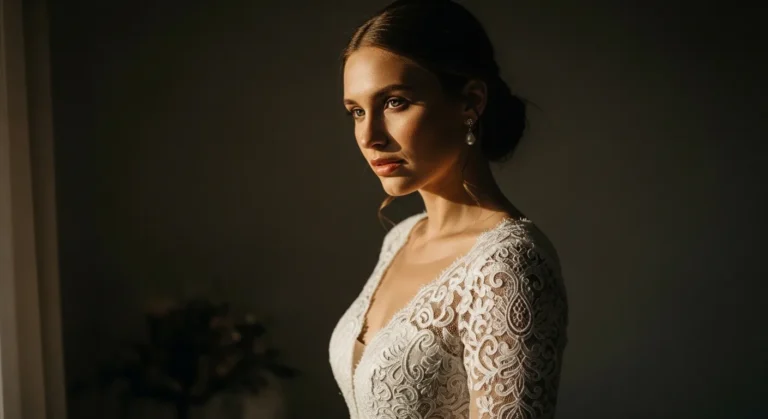
Floral lace is the wedding dress fabric that most directly speaks the language of spring — and the reason is not simply that lace is traditional or romantic, but that the botanical detail of a good floral lace and the natural world of a spring ceremony are in genuine conversation with each other. The flowers in the lace echo the flowers in the setting. The intricate patterns of the fabric echo the intricate patterns of nature. The dress becomes part of the landscape rather than a formal object placed within it.
A floral lace overlay over a simple satin or chiffon base creates a dress with two distinct layers of beauty — the clean silhouette underneath and the elaborate surface detail above. From across the ceremony space the lace reads as a soft, textured surface. Up close it reveals its full intricacy — each floral motif individually worked, each pattern repeating with the small natural variations that distinguish quality handmade or carefully machine-made lace from a simple printed alternative.
The way floral lace catches natural spring light is one of the most extraordinary things in all of bridal fashion. The three-dimensional quality of the lace — the slight relief of the threads above the backing fabric — creates a play of light and shadow across the surface that shifts with every movement and with every change in the angle of the light. In a morning outdoor ceremony, in the soft diffused light of a clouded spring sky, a floral lace wedding dress produces photographs of an almost impossible beauty.
For a spring outdoor ceremony specifically, floral lace is the most contextually perfect fabric choice available. The dress does not compete with the setting — it participates in it. And that quality of belonging rather than simply appearing creates the most genuinely beautiful and most genuinely spring bridal images.Styling note: Choose a floral lace with slightly three-dimensional texture — raised threads, scalloped edges, petit point detail — rather than a flat woven or printed lace. The dimensional quality catches light more dramatically and creates more visual depth in photographs. Flat lace photographs similarly to any plain fabric. Three-dimensional lace photographs like something genuinely extraordinary.
2. The Flowing Chiffon Dress
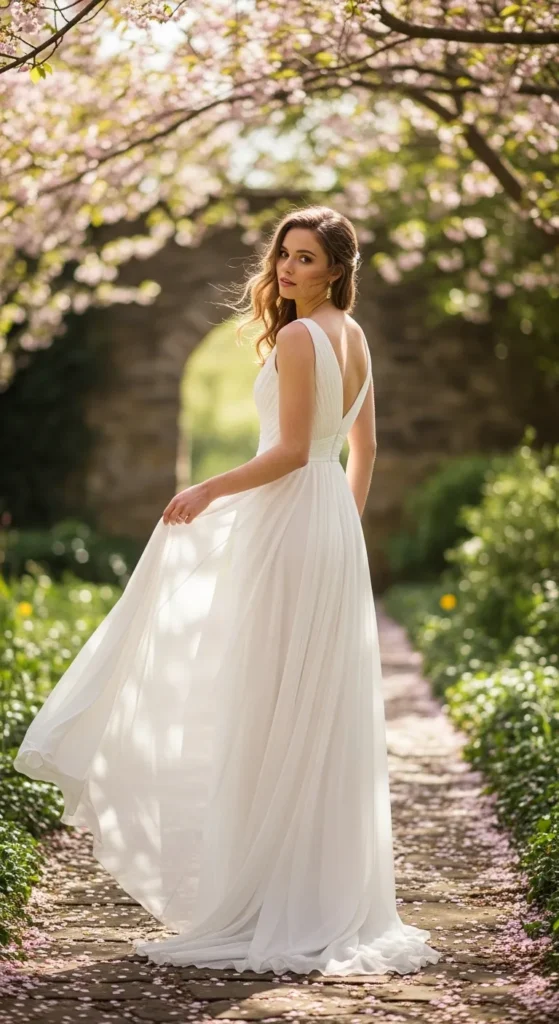
Chiffon is the spring wedding dress fabric that most completely captures what the season actually feels like — light, warm, moving, alive. A flowing chiffon wedding dress in multiple soft layers does not simply look beautiful in spring light. It behaves like spring light — shifting, flowing, responding to the air around it in a way that heavier fabrics cannot replicate.
The practical qualities of chiffon for a spring wedding are as significant as the aesthetic ones. It is physically lightweight — wearing it for a full ceremony and reception does not create the warmth or the weight that structured fabrics with boning and multiple petticoats inevitably do. In a warm spring setting this matters considerably. A bride who is comfortable and cool throughout the day wears her dress with a naturalness and ease that is visible in every photograph.
A flowing chiffon dress in a soft champagne, warm ivory, or delicate blush with a gentle A-line silhouette is the version I find most consistently beautiful for spring. The A-line shape creates the clean, balanced silhouette that chiffon’s softness needs to read as genuinely elegant rather than simply unstructured. The slight flare from the hip creates movement and a quality of romantic beauty that the more fitted versions do not produce in the same way.
The colour choice in a chiffon wedding dress matters particularly because chiffon’s translucent quality means the body beneath it influences the final colour more than with opaque fabrics. A warm champagne or ivory chiffon drapes and photographs differently against different skin tones — and testing the specific colour in the specific light of the ceremony venue before committing is more important with chiffon than with most other bridal fabrics.
Styling note: A chiffon wedding dress with delicate spaghetti straps or a subtle flutter sleeve feels more current and more spring-appropriate than the strapless version. The delicate sleeve detail adds a quality of romantic lightness that the bare shoulder of a strapless dress does not produce — and it moves beautifully in a spring breeze in a way that adds a constantly changing, living quality to the dress.
3. The Satin Slip Wedding Dress
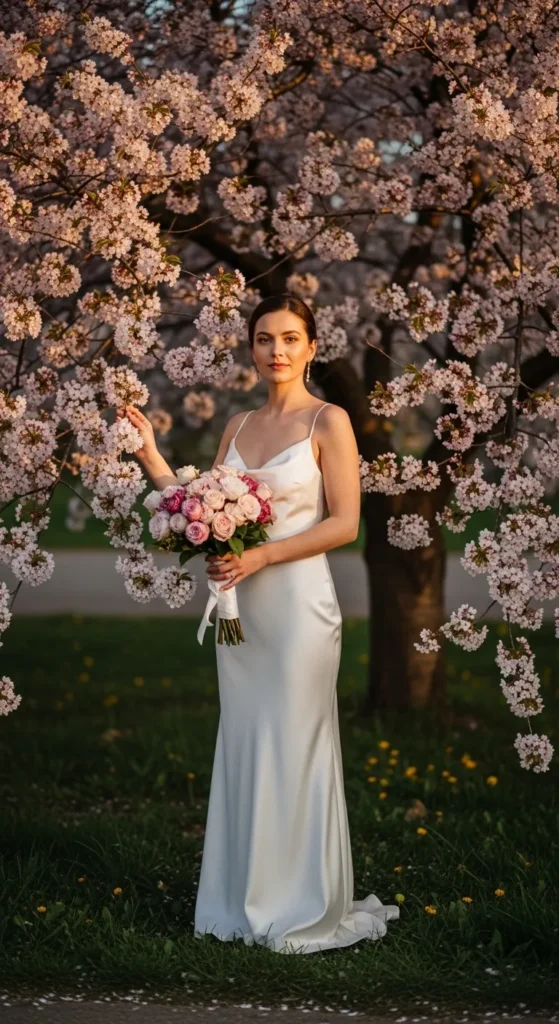
The satin slip wedding dress is the choice that requires the most confidence and produces the most enduring impression — and understanding why requires understanding what the slip dress is actually doing. It is not doing less than a more elaborate bridal dress. It is doing something different. It is removing every element of the dress that performs and keeping only the elements that genuinely contribute beauty — the quality of the fabric, the precision of the cut, the way the bias grain creates a drape that follows the body with a naturalness that no other construction produces.
A bias-cut satin slip wedding dress is one of the oldest silhouettes in bridal fashion and one of the most modern. It appeared at the beginning of the twentieth century and it continues to appear in the most current bridal collections because its logic is simply correct — beautiful fabric, cut precisely, worn with confidence, needs nothing else.
The satin surface catches natural spring light with a soft luminosity that is genuinely extraordinary. Not the hard, mirror-like reflection of a cheaper satin — the warm, liquid glow of a quality charmeuse or duchess satin that appears to generate light from within rather than simply reflecting it from outside. In a morning spring ceremony, in the warm diffused light of a late spring afternoon, a quality satin slip dress creates a bridal image of remarkable beauty.
The specific quality of the satin is the single most important decision in this dress. A quality satin drapes in long, smooth, uninterrupted lines from shoulder to floor. A lesser satin shows irregularities in the weave, catches light unevenly, and loses its drape within hours of wearing. This is the dress where fabric investment matters most directly and most visibly.Styling note: The only accessory a satin slip wedding dress genuinely needs is a pair of truly extraordinary shoes — because the simplicity of the dress gives the shoe complete visibility and makes it the one element of the outfit that contributes significant additional personality. Choose the shoes before finalising any other accessory decision for this dress.
Find delicate details in 14 Beautiful Lace Sleeve Wedding Dresses to Try.
4. The Cottagecore Wedding Dress
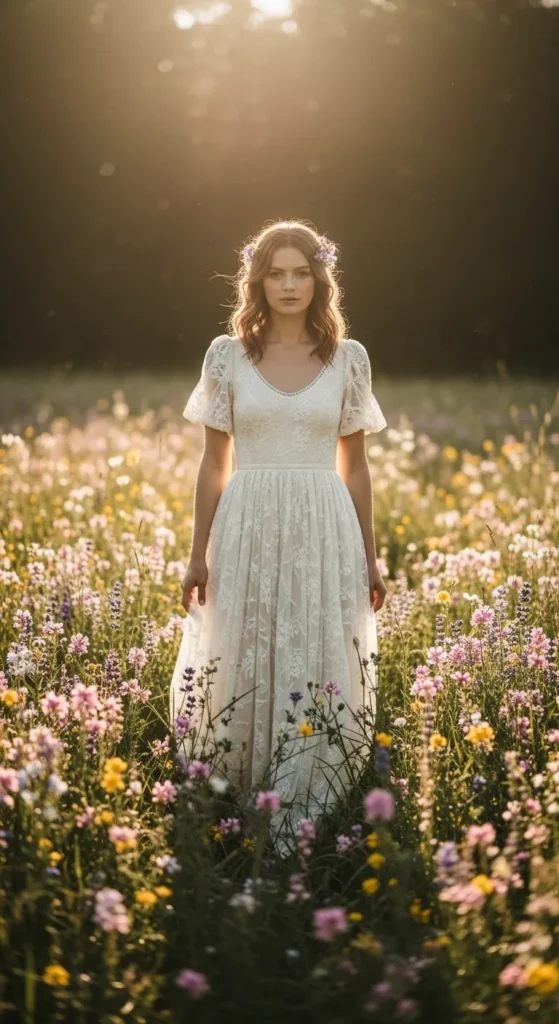
The cottagecore wedding dress is the bridal style that has surprised me most in how genuinely beautiful it is when executed with real quality and real intention — because the aesthetic could easily become costume-like in less skilled hands and instead, in its best versions, creates something of rare charm and authenticity.
Puff sleeves in the right proportion, delicate floral embroidery worked with genuine care, a fitted bodice with smocking or button detail, a flowing A-line skirt in natural fabric — these elements together create a dress that belongs to a specific and deeply appealing vision of romantic beauty. Not the formal romantic beauty of a ballgown. The natural, pastoral romantic beauty of a wildflower meadow in the morning.
The cottagecore aesthetic celebrates exactly what spring celebrates — natural beauty, organic detail, the handcrafted and the imperfect and the genuinely alive. A cottagecore wedding dress in a garden ceremony or a country outdoor setting does not need the setting as a backdrop. It becomes part of the setting. The dress and the day are in complete harmony.
Fabric choice is the most important quality decision in a cottagecore wedding dress. A natural fabric — quality cotton, lightweight linen, a fine cotton voile — carries the aesthetic’s authenticity in a way that synthetic alternatives cannot replicate. The slight texture and natural movement of organic fabrics connects to the cottagecore’s relationship with the natural world in a way that polished synthetics work directly against.
Styling note: Simple wildflower hair accessories — small dried flowers, delicate fresh stems pinned loosely — and minimal jewellery allow the cottagecore wedding dress to tell its complete story without any competing elements. The dress itself carries everything. The accessories should participate quietly rather than add to the visual conversation the dress is already having so beautifully.
5. The Minimalist Column Dress
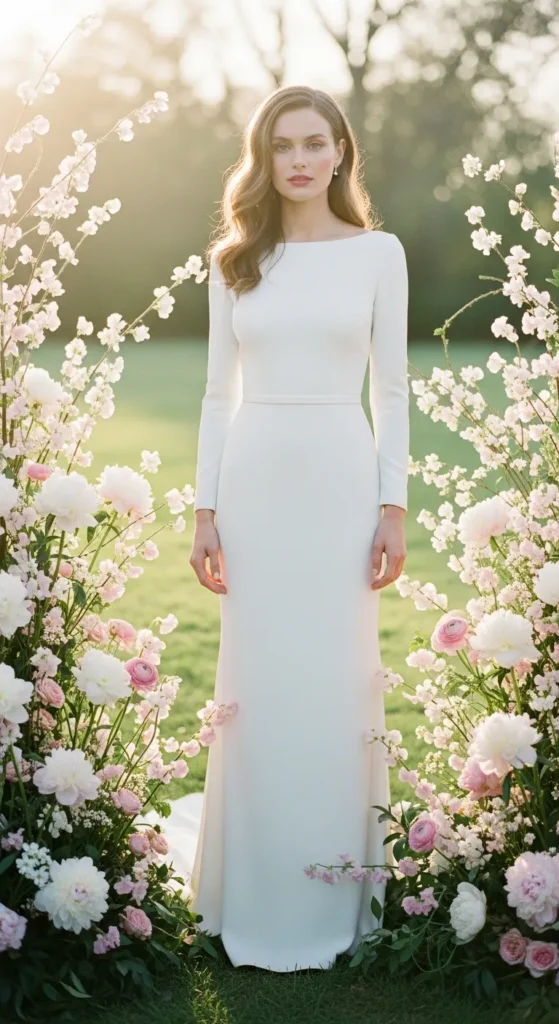
The minimalist column wedding dress is the bridal style that most clearly separates brides who have thought deeply about what they want their wedding dress to communicate from those who have simply chosen what is traditionally expected. It is not the safe choice. It is the choice that requires the most confidence and the clearest sense of personal aesthetic identity — and when both of those things are present, it produces a bridal look of extraordinary power and enduring elegance.
The minimalist column works because its simplicity is not absence — it is the most precise and most deliberate form of presence. Nothing in the dress is accidental. Every line, every seam, every detail that is not there was specifically chosen not to be there. The result is a dress that communicates complete intention and complete certainty — the same qualities that the most compelling brides project throughout their entire wedding day.
In spring light, the minimalist column wedding dress does something that more elaborate dresses cannot. It allows the setting to be fully present without the competition of embellishment, structure, or visual complexity. The bride and the dress together, clean and simple, surrounded by the organic abundance of spring — that image has a quality of genuine beauty that no amount of decoration could improve.
The fabric of a minimalist column wedding dress is the entire design — which means it must be exceptional. A quality crepe that drapes in a single clean line. A silk that catches light without creating visual noise. A mikado that holds its shape while remaining fluid and natural in movement. The fabric is not supporting the design. The fabric is the design.
Styling note: A minimalist column wedding dress with genuinely extraordinary shoes and one piece of exceptional jewellery — a single meaningful necklace or a pair of statement earrings, never both simultaneously — creates the most perfectly edited bridal look available. The restraint is the luxury. The simplicity is the statement.
6. Spring Wedding Dresses: The Boho Maxi Dress
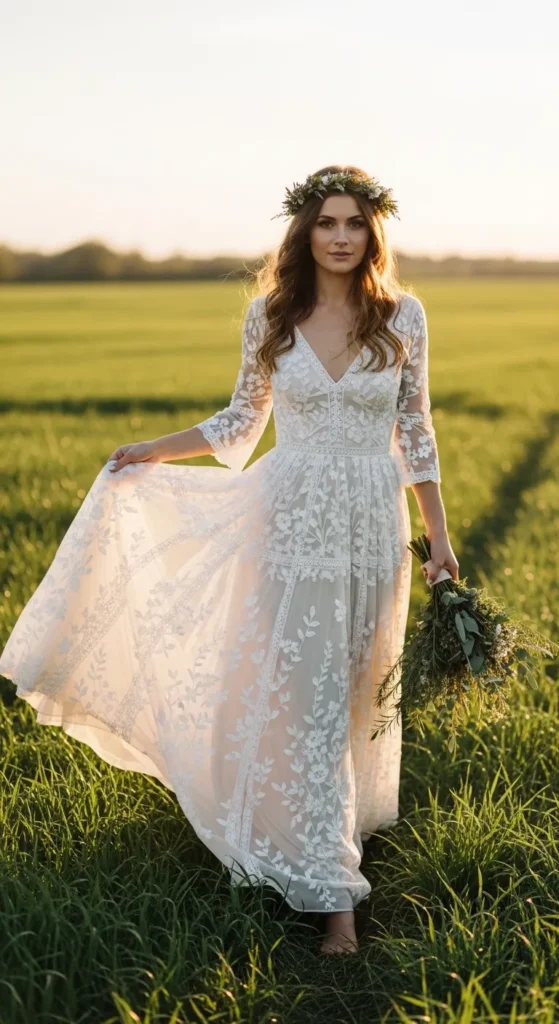
The boho wedding dress is the style for the bride who has thought carefully about what her wedding day should feel like and decided that authentic, personal, and genuinely joyful matters more than formally beautiful. It is not a compromise — it is a very specific and very considered aesthetic choice that produces a bridal look of remarkable individuality and genuine charm.
A flowing boho wedding maxi in ivory, cream, or warm natural white — with relaxed layers, natural fabric, delicate fringe or tassel detail, and a silhouette that moves freely and naturally — belongs in the outdoor spring settings where it is most frequently worn in a way that no other bridal style quite manages. The dress looks like it was made specifically for a wildflower meadow, a beach ceremony, or a rustic garden.
The boho wedding dress photographs with a warmth and an individuality that more formal bridal styles cannot replicate — because the relaxed quality of the style means the bride is visible inside the dress rather than the dress containing and presenting the bride. That visibility of the person is what makes boho wedding photographs so consistently compelling and so consistently personal.
Natural fabric in a boho wedding dress is not just an aesthetic preference — it is a practical one. Linen, cotton voile, and crinkle chiffon all breathe naturally and move beautifully in the way that polyester and synthetic alternatives cannot. In the warm spring air of an outdoor ceremony, the difference between wearing natural fabric and synthetic is felt immediately and constantly.
Styling note: The boho wedding dress is worn most beautifully with hair that is natural, slightly undone, and adorned with simple organic elements — dried flowers, delicate braids, loose waves. The hair should feel as naturally beautiful as the dress. Anything too polished or too formally styled creates a contradiction with the dress’s entire aesthetic that shows immediately in photographs.
7. The Off-Shoulder Dress
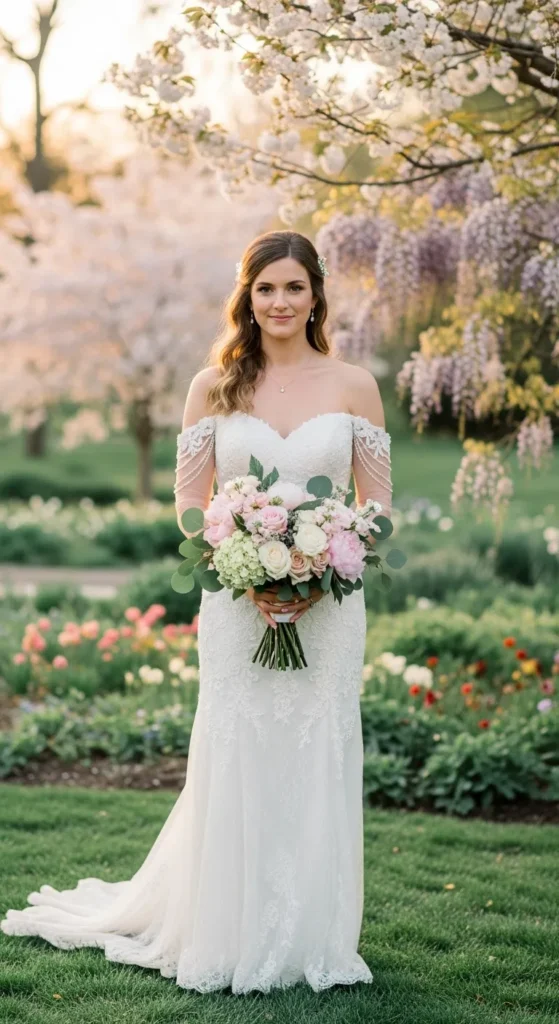
The off-shoulder neckline is one of the most consistently romantic and most universally flattering bridal details available — and its specific quality in a spring wedding context is that it feels completely aligned with the season’s warmth and openness. There is a quality of ease in an off-shoulder dress — the way it rests on the arms, the way it exposes the collarbone and shoulder, the naturalness of wearing something that fits without requiring fastening or structure at the neckline — that feels exactly right for a warm spring day.
The off-shoulder neckline photographs with an extraordinary quality in natural spring light because of what it reveals. The collarbone and the upper shoulder are two of the most beautifully lit areas of the body in outdoor natural light — they catch the light cleanly and create a luminosity that makes the bride glow in photographs taken at a spring ceremony. This is not accidental. It is the reason the off-shoulder neckline has appeared in bridal fashion across centuries.
A soft off-shoulder ruffle — a single layer of the dress fabric or a delicate organza addition that sits slightly off the shoulder — creates a romantic, slightly fluttering detail that is one of the most beautiful in all of spring bridal fashion. The ruffle catches the spring breeze and moves with it, creating a constant gentle animation of the neckline area that no static detail can replicate.
The fabric choice in an off-shoulder dress determines whether the neckline sits correctly throughout the day. A fabric with structure and body — a quality satin, a duchess organza, a bonded lace — holds the off-shoulder position correctly without constant adjustment. A fabric that is too light or too soft may slip throughout the ceremony and require attention that takes the bride out of the moment.
Styling note: Earrings rather than a necklace are the correct jewellery choice for an off-shoulder wedding dress. The neckline itself — the exposed collarbone, the gentle curve of the shoulder — is the jewellery setting and it is more beautiful than any necklace that could be placed against it. Drop earrings that fall to or just below the jaw create the perfect framing for the face above the off-shoulder neckline below.
8. The Puff Sleeve Wedding Dress
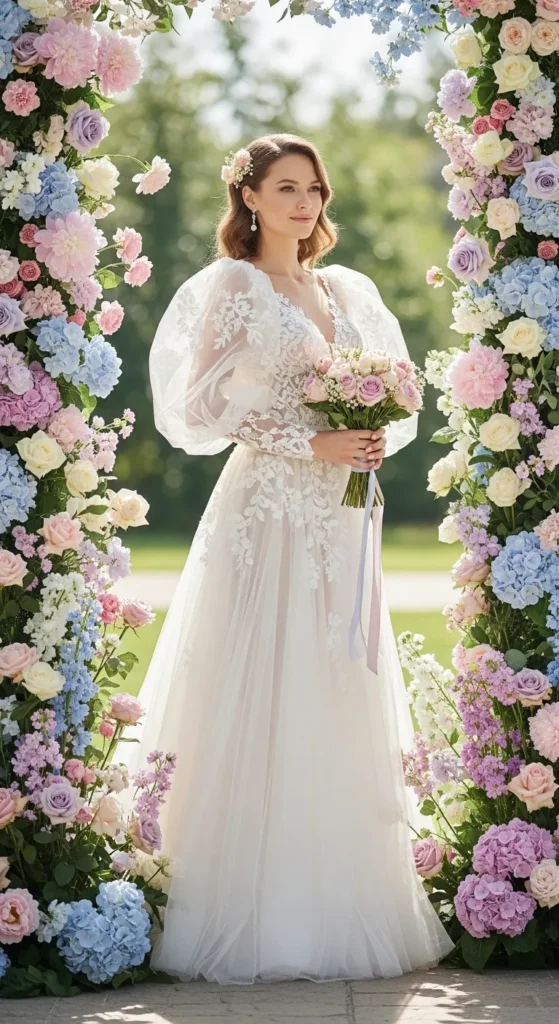
The puff sleeve wedding dress is the spring bridal choice that requires the most commitment and produces the most purely visual impact — and the bride who wears it with complete confidence and complete ease creates one of the most photographically extraordinary bridal images available in contemporary wedding fashion.
The puff sleeve adds drama, volume, and a quality of deliberate ceremony to a bridal silhouette that more understated sleeve treatments cannot achieve. It signals — clearly and unambiguously — that the bride dressed for the occasion with full intention and complete commitment. There is no accidental quality to a puff sleeve. It was chosen. It was wanted. It is exactly what it is supposed to be.
In spring light, the puff sleeve creates a silhouette of remarkable sculptural beauty. The volume at the shoulder catches light differently from any other part of the dress — creating shadows in the folds, highlights at the peaks, a constant visual variation across the surface of the sleeve that photographs with a depth and complexity that simpler sleeve treatments do not produce.
A dramatic bishop sleeve or a structured balloon sleeve needs to be balanced by a clean, relatively simple skirt below. The sleeve is carrying the drama of the entire dress. A heavily embellished or volumetrically dramatic skirt alongside a dramatic puff sleeve creates visual confusion — too much happening simultaneously without a clear focal point. The sleeve leads. The skirt supports.
Styling note: The puff sleeve works most beautifully with hair worn up or swept away from the face and shoulders — because the visual impact of the sleeve depends on its full silhouette being clearly visible from the front and the side. Hair that falls over the shoulder partially covers the sleeve’s shape and reduces the impact of the detail that is the entire point of the dress.
Explore contemporary designs in 12 Minimalist Wedding Dresses for the Modern Bride.
9. The Tiered Ruffle Dress
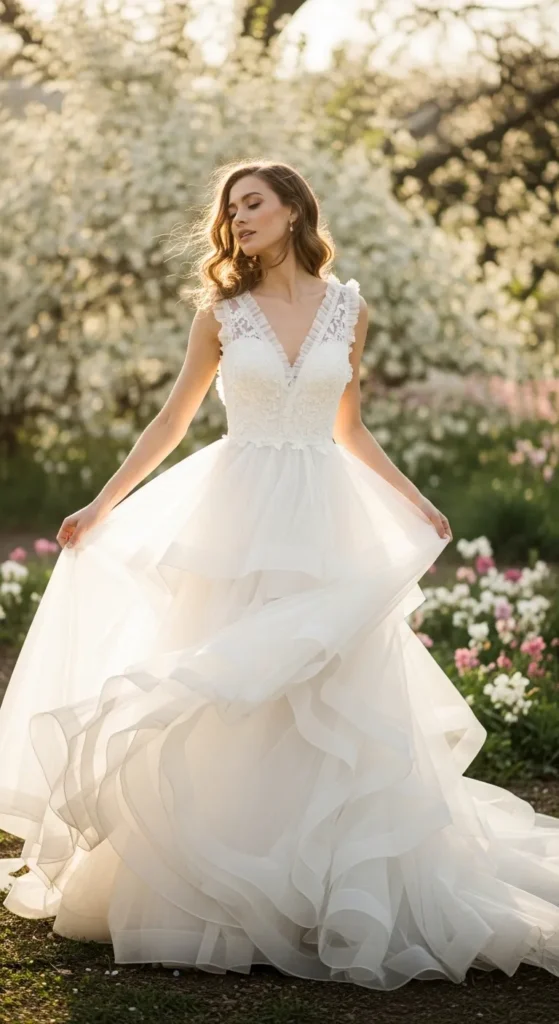
The tiered ruffle wedding dress is the spring bridal choice that most directly celebrates movement — and in a season defined by things in motion, that celebration is entirely appropriate. Every step the bride takes in a tiered ruffle dress creates a visual event — the layers cascade, overlap, separate, and resettle in a constantly changing arrangement that is different in every moment and in every photograph.
The tiered construction works because of what it does to light. A single layer of fabric catches light in one way — a flat, relatively simple surface that responds to the light source in a predictable manner. Multiple tiers of overlapping fabric catch light across multiple depths simultaneously — each tier at a slightly different angle, each creating its own highlights and shadows, all together creating a depth and visual richness that flat constructions simply cannot produce.
For a spring wedding where outdoor photography is planned, the tiered ruffle dress is the choice that produces the most extraordinary action images. A bride walking across a garden path, dancing at the reception, turning to embrace someone — the tiered ruffle responds to each of these movements with a visual beauty that still photographs of a posed bride in a structured dress cannot capture. The movement is the medium.
The fabric weight in a tiered ruffle dress is critical — lighter than expected at each tier creates the most beautiful cascade, as the layers move independently of each other rather than as one heavy mass. Chiffon, organza, and lightweight tulle all create the individual tier movement that makes this silhouette so extraordinary. Heavier fabrics create beautiful volume but lose the individual tier movement that is the dress’s most distinctive quality.
Styling note: A tiered ruffle wedding dress photographs most beautifully in motion rather than in static poses. Brief your photographer specifically about capturing the movement of the dress — the action of walking, dancing, and turning creates the images that will be the most treasured from the day. The dress is at its most extraordinary when it is being lived in rather than simply worn.
10. The Wedding Dress
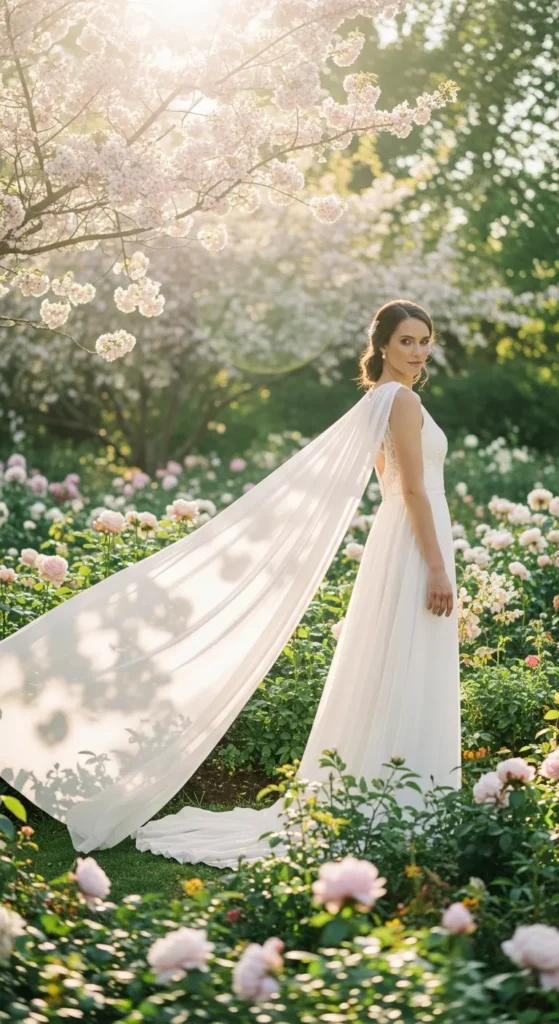
The bridal cape is the spring wedding detail that transforms the most — and the bride who chooses it is making a specific and genuinely inspired decision about the relationship between simplicity and drama in her bridal look. The cape takes a simple dress and gives it an occasion weight, a movement quality, and a visual drama that no amount of embellishment on the dress itself could produce.
A delicate lace or embroidered tulle cape worn over a clean satin slip dress is one of the most extraordinary combinations in contemporary bridal fashion — because the contrast between the elaborate cape and the minimal dress creates a visual tension that is simultaneously minimal and completely dramatic. The dress underneath is almost nothing. The cape above is almost everything. Together they create a bridal look that is more powerful than either element would be in any more conventional arrangement.
In spring, the cape has a specific magic that no other season replicates in the same way. A spring breeze lifts a delicate lace or chiffon bridal cape and creates the most extraordinary, most cinematic, most purely beautiful bridal photographs available. The moment of a cape caught in the wind at an outdoor spring ceremony — that specific floating, dynamic, completely unpredictable image — is one of the most beautiful things a wedding photographer can capture.
The attachment and movement of the cape requires careful consideration before the wedding day. A cape that is too heavy for the spring breeze creates a static, theatrical effect rather than the flowing, dynamic one. A cape that is too lightweight may require deliberate movement to create the desired effect. Testing the cape in outdoor conditions similar to the ceremony setting before the day itself is the practical decision that ensures the beautiful result.
Styling note: A bridal cape in delicate floral lace worn over a simple bias-cut satin dress is the most spring-specific and most photographically extraordinary cape combination available. Plan with your photographer specifically for the cape moment — the outdoor shot where the cape is in full movement in a spring breeze creates an image that will be the most shared and most treasured photograph from the entire day.
11. The Garden Party Wedding Dress
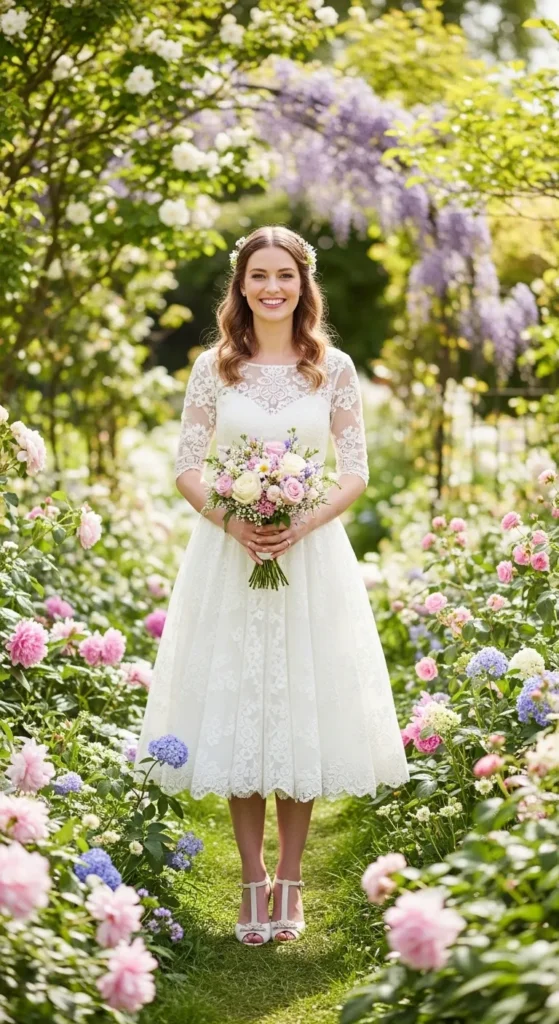
The garden party wedding dress — with its tea-length or midi hemline, its botanical detail, and its quality of being genuinely joyful rather than formally ceremonial — is the spring bridal choice that most completely expresses what a spring outdoor wedding actually feels like when it is at its very best. Warm, beautiful, filled with flowers, people the couple loves, and a quality of genuine happiness that is more important than any amount of formal beauty.
A tea-length floral or botanically embroidered wedding dress in a garden ceremony setting is one of the most charming and most genuinely beautiful spring bridal images possible — and the specific quality that makes it beautiful is its appropriateness to its context. The dress belongs there. It is not a formal gown that arrived at a garden party. It is a garden party dress that happens to be a wedding dress. That belonging creates a specific quality of natural beauty that more formal bridal choices cannot replicate in outdoor spring settings.
The shorter hemline of a garden party wedding dress is its most practically significant quality — it allows the bride to move freely across a garden setting, through grass, across paths, without the constant management that floor-length trains require. That freedom of movement changes how the bride carries herself throughout the day and that change is visible in every photograph. A bride who can move freely and naturally looks different from a bride who is managing her dress.
A subtle botanical print on an ivory or cream base — small flowers, delicate leaves, soft botanical detail rather than a bold statement print — reads as sophisticated and genuinely bridal rather than simply pretty. The subtlety of the print keeps the dress within the bridal world rather than tipping into the realm of a nice floral dress worn to a garden party.
Styling note: Simple leather or fabric wedding shoes with a modest heel or a clean flat are the most contextually appropriate footwear for a garden party wedding dress — because the tea-length hemline makes the shoe fully visible throughout the ceremony and reception, and a shoe that is too formal or too elaborate creates a register mismatch with the dress’s natural, joyful quality.
12. Spring Wedding Dresses: The Romantic Ballgown
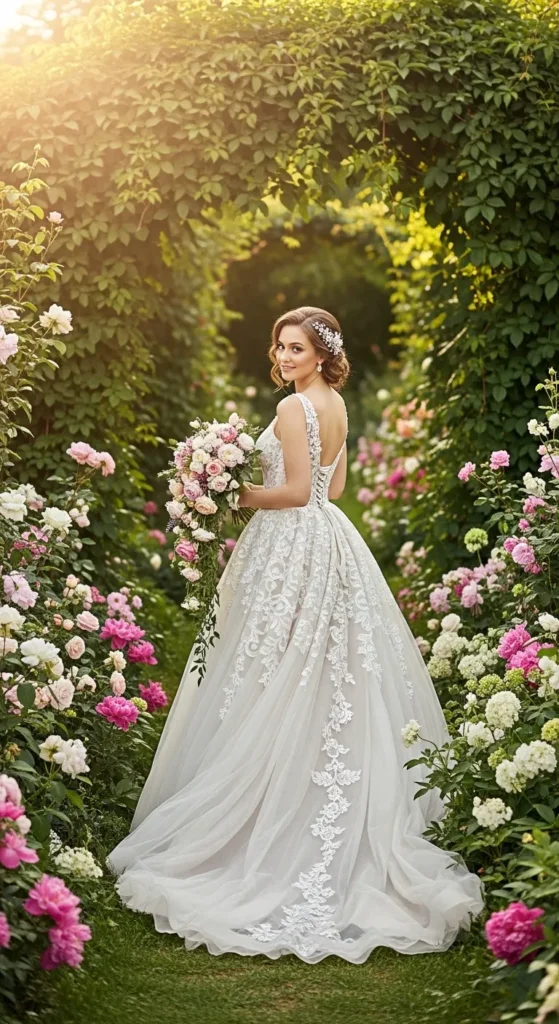
The romantic ballgown is the spring wedding dress for the bride who has known exactly what she wanted since she was a child and has not changed her mind — and I mean that entirely as a compliment. There is a quality of complete certainty in choosing a full romantic ballgown that is genuinely compelling. The bride who wears one with total conviction and total ease is making one of the most powerful statements in all of bridal fashion: this is exactly what I wanted. I am wearing it. I am completely right.
A full tulle or organza skirt in multiple layers creates a silhouette of extraordinary visual volume and beauty — and in spring, surrounded by the abundant, lush beauty of flowers and natural light, that volume and beauty find their perfect natural counterpart. Spring is not a season of restraint. It is a season of fullness and abundance and complete bloom. A ballgown bride in a spring garden is a bride in complete harmony with her setting.
The fitted bodice of the classic romantic ballgown should be as precisely made as the skirt is full — the contrast between the close, structured bodice and the dramatically volumetric skirt is the proportion logic that makes the ballgown silhouette so consistently beautiful and so consistently flattering. A bodice that is too loose loses this contrast. A bodice that is perfectly fitted creates it absolutely.
Delicate floral appliqué at the bodice — small handworked flowers in the same fabric as the skirt, or in delicate lace or beading — connects the dress to the spring setting in the most specific and most beautiful way. The flowers on the dress echo the flowers in the setting. The bride is in conversation with the season she is being married in.
Styling note: A romantic ballgown requires a cathedral or at minimum a chapel length veil — a shorter veil creates a proportion mismatch with the full skirt’s drama that reduces rather than enhances the overall impact. The veil should trail behind the skirt or fall to the floor at the back of the skirt’s hem for the most complete and most photographically extraordinary bridal silhouette.
Final Thoughts
The right spring wedding dress is not the most beautiful dress in the bridal boutique. It is the dress that makes you look most completely and most naturally like yourself — on this day, in this light, surrounded by these flowers and these people.
Every bride I have ever seen who looked extraordinary on her wedding day shared one quality: she looked at ease. Not perfectly styled. Not formally presented. At ease. The dress fit not just her measurements but her personality — her specific relationship with beauty and with herself. The dress looked like a choice rather than a selection. It looked like hers.
These 12 spring wedding dresses offer 12 different versions of that quality — 12 different ways of being genuinely and beautifully yourself in spring light. Some are elaborate and some are minimal. Some are dramatic and some are quiet. All of them are capable of being the right dress for the right bride.
Find the one that makes you feel something specific when you put it on. Not just beautiful — something more precise than that. Something that feels like recognition rather than admiration. That is the one.