10 Wedding Dress Trends Every Bride Needs to Know
Here is the honest truth about bridal boutique appointments that nobody tells you before you book your first one: they are overwhelming in direct proportion to how unprepared you are. Walk in knowing nothing about what you want, nothing about what is available, and nothing about what is happening in bridal fashion right now — and the sheer quantity of options, opinions, and price points will create a paralysis that makes the most important dress decision of your life feel impossible rather than exciting.
Walk in knowing what you are looking at and why — and the same appointment becomes one of the most genuinely enjoyable style experiences available. You can see immediately which silhouettes align with your personal aesthetic. You can explain clearly what details you are drawn to and why. You can evaluate what a designer is offering against a clear sense of what the best of 2026 bridal fashion looks like. That knowledge changes everything.
I have spent a significant amount of time studying what is happening in bridal fashion for 2026 — not just the trends themselves but the reasons behind them, the designers leading them, and most importantly how each trend translates from the runway or the editorial photograph into what a real bride actually experiences on her actual wedding day. These 10 trends are the ones that matter — the ones worth understanding before you walk into that first appointment.
1. Sculptural Minimalism

Sculptural minimalism is the bridal trend that separates the most sophisticated end of 2026 wedding fashion from everything else — and understanding what it actually means is important because it is frequently confused with simply plain or simple, which it is not. A plain dress is plain. A sculpted dress is an architectural achievement. The difference is in what the construction is doing and the level of skill required to do it correctly.
A sculptural minimalist wedding dress relies entirely on the precision of its seaming, the quality of its fabric, and the exactness of its construction to create visual interest. There is no embellishment to provide distraction. There is no decoration to compensate for imprecision. Every seam is visible and every seam must be perfect. The fabric is the design — which means the fabric must be exceptional, because poor quality fabric in a minimalist construction has nowhere to hide.
What sculptural minimalism achieves that no other bridal aesthetic can is a quality of complete, undivided attention to the person wearing the dress rather than the dress itself. An elaborately embellished dress presents itself — the beading and the lace and the florals communicate before the bride does. A sculptural minimalist dress steps back and gives the bride the room to communicate first. For certain brides — the ones with the confidence and the clarity of personal aesthetic that this approach requires — the result is one of the most powerful bridal looks imaginable.
The practical consideration that most brides underestimate with sculptural minimalist dresses is the fitting requirement. A sculptural dress that fits with precision looks extraordinary. The same dress even slightly imprecisely fitted loses everything that makes it extraordinary — because there is no decoration to redirect the eye away from a fit issue. Multiple fittings with a skilled seamstress who understands the specific construction of the dress are not optional. They are the difference between a sculptural minimalist dress that fulfils its potential and one that simply looks unfinished.
What to look for: A sculptural minimalist wedding dress in an exceptional fabric — quality crepe, duchess satin, or structured silk — with construction details like architectural darts, precise seaming, or a single significant structural element like a sculptural pleat or an origami-fold bodice detail. The dress should look more interesting the longer you examine it — not through decoration but through construction.
2. The Return of the Corset Bodice
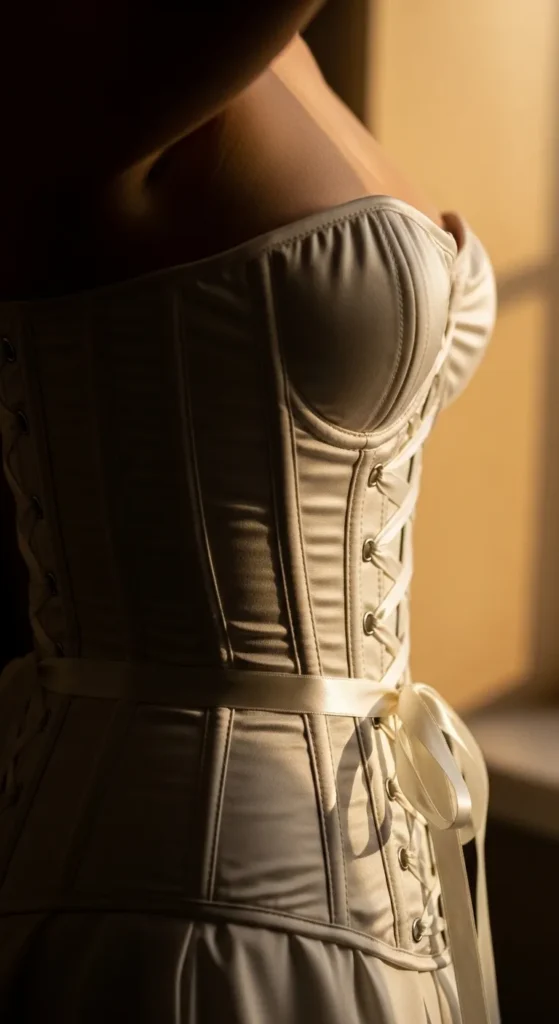
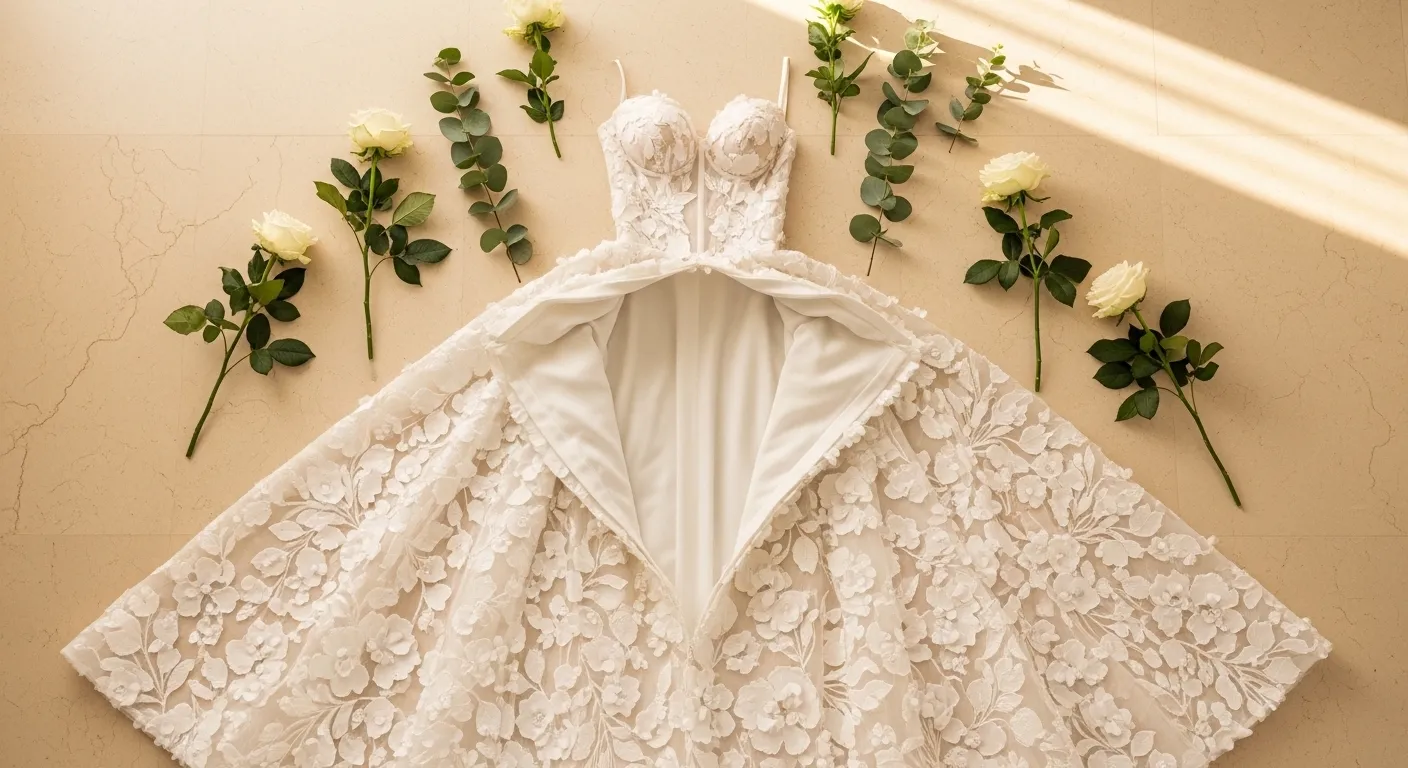
The corset bodice has returned to bridal fashion in 2026 in its most fully realised and most genuinely beautiful iteration — and the reason is both aesthetic and practical. Aesthetically, a properly constructed corset bodice creates a silhouette that nothing else in bridal construction can replicate. The definition of the waist, the lift and support of the bust, the dramatic narrowing from rib to hip — these are qualities that modern boning and construction techniques produce only when the corset is genuinely, fully present as the structural foundation of the bodice.
Practically, a corset bodice provides the support that allows a bride to wear a strapless or low-cut dress with complete confidence throughout an entire day — the internal structure doing the work that external support elements like cups and boning strips cannot replicate with the same reliability. The bride who has worn a corset-bodied wedding dress through a full ceremony and reception almost universally reports the same thing: she was aware of the support throughout the day in the most positive possible way.
The lace-up back that most corset bodices feature is simultaneously the most practical and the most photographically beautiful element of this design. Practical because it allows for exact adjustment on the wedding day — the corset can be laced more or less tightly depending on how the bride feels on the morning of her wedding, accommodating any minor fluctuation in fit. Beautiful because the lace-up back detail in photographs from behind — the clean lines of the lacings, the drama of the open back, the structure of the boning visible through the lacing — is one of the most extraordinary and most frequently photographed bridal details available.
The corset bodice works with an extraordinary range of skirt styles — each pairing creating a completely different aesthetic and a completely different bridal identity. A full ballgown skirt with a corset bodice creates the most classically romantic bridal silhouette. A flowing A-line creates something more relaxed and more natural. A straight minimal skirt or wide-leg bridal trousers creates the most fashion-forward and most contemporary interpretation.
What to look for: A corset bodice with genuine boning — not simply structured fabric that mimics the appearance of boning but actual boning channels with real boning inside them. The difference is felt immediately when you put the dress on — real boning provides a quality of structured support that nothing else creates. The lace-up back should be adjustable, well-finished, and easy to manage with the assistance of a second person.
See timeless styles in 12 Minimalist Wedding Dresses for the Modern Bride.
3. Dramatic Sleeves
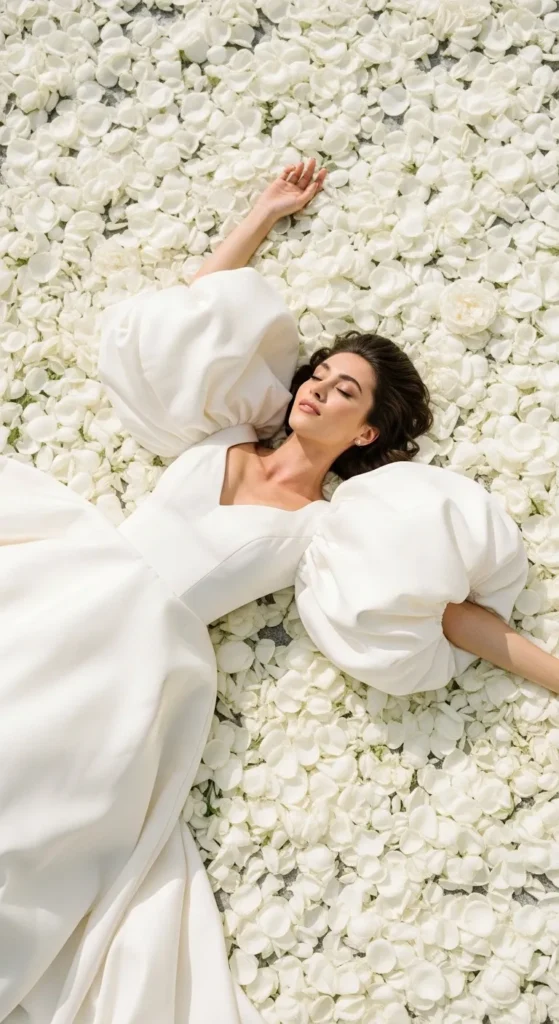
Statement sleeves are having the most significant moment in bridal fashion in decades — and the range of what dramatic sleeves can mean in 2026 is broader and more genuinely exciting than any previous iteration. From the most operatically voluminous bishop sleeve to the most delicately fluttering chiffon detail, the sleeve is the single design element that most changes the character and the visual impact of a bridal dress while leaving the fundamental silhouette intact.
What I find most interesting about the dramatic sleeve trend in 2026 bridal fashion is the way it allows a bride to make a strong, personal visual statement through a detail rather than a silhouette. A completely simple satin column dress with dramatic puff sleeves is simultaneously minimal and completely extraordinary. The simplicity of the dress allows the sleeve to be fully, completely seen — which is exactly the right relationship between the two elements. The dress frames the sleeve. The sleeve carries the personality.
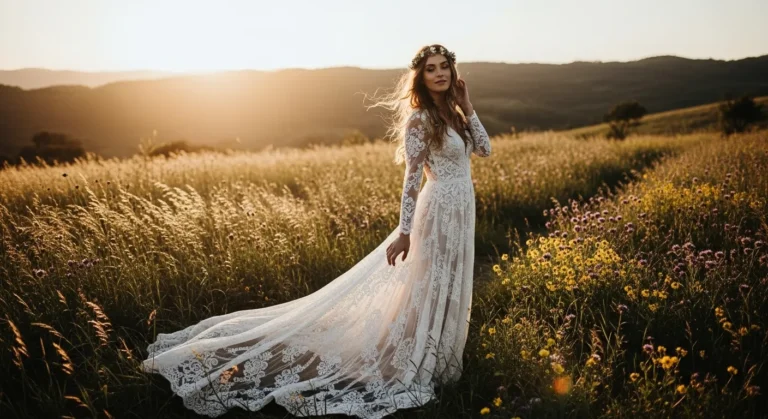
Different sleeve styles serve completely different bridal aesthetics and it is important to understand these distinctions before trying on options. A dramatic puff or bishop sleeve adds romance, drama, and a quality of fairy-tale occasion that is most appropriate for grand, ceremonial weddings with formal settings. A long fitted lace sleeve adds refinement, elegance, and a connection to historical bridal traditions that works beautifully at more traditional or religious ceremonies. A delicate flutter sleeve adds femininity and lightness that is most appropriate for spring or summer outdoor occasions.
The practical consideration with dramatic sleeves that most brides do not think about before their appointment is movement — specifically, how the sleeve moves with the body during the activities of a full wedding day. A dramatically voluminous sleeve that is beautiful when standing still may create limitations during the ceremony, the signing of the register, the hugging of guests, or the dancing at the reception. Trying the sleeve in motion — raising your arms, embracing someone, sitting down — before committing to any dramatic sleeve style is genuinely important practical advice.
What to look for: A sleeve that feels as beautiful to wear as it looks — one that moves naturally with the body rather than against it. The attachment of the sleeve to the bodice is the construction detail that most determines this quality. A sleeve that is well-attached and correctly balanced will feel like part of the dress. A sleeve that is poorly attached or incorrectly weighted will feel like something added to the dress, and that feeling is visible in how it is worn.
Discover bold modern styles in 10 Convention Defying Wedding Dresses.
4. Sustainable and Natural Fabrics
The movement toward sustainable and ethically produced bridal fashion in 2026 is one of the most genuinely significant shifts in the industry’s direction — and it is happening not because of external pressure on bridal designers but because of real and specific demand from brides who want their wedding dress to reflect the values they live by on every other day of their life.
A wedding dress is the most significant garment most people will ever wear — in terms of its emotional weight, its cost, and the number of hours of someone’s labour that went into creating it. The question of where that labour happened, under what conditions, and with what materials is one that increasing numbers of 2026 brides are asking before they purchase. The industry is responding — not uniformly and not always completely honestly, but the direction is clear and the best designers in this space are producing work of genuine quality and genuine ethical integrity.
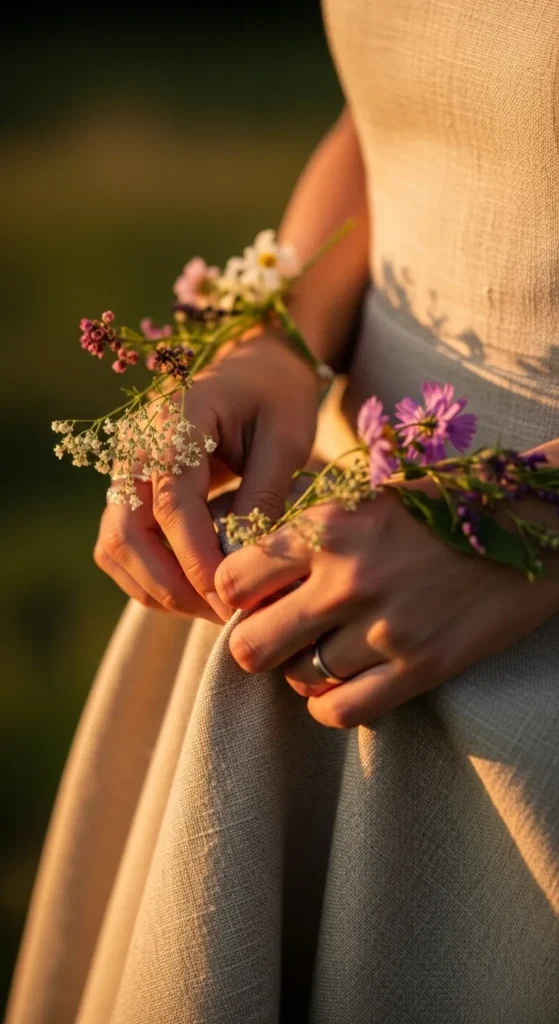
What sustainable bridal fashion actually looks like in practice is more beautiful and more varied than the term might suggest. Organic cotton with a natural texture and an inherent warmth that synthetic alternatives cannot replicate. Naturally dyed silk in tones that have a specific, organic richness different from chemically dyed alternatives. Recycled lace that carries its own history and character. Deadstock fabric — unused material from other production runs — that is genuinely beautiful and genuinely responsibly sourced. These are not compromise materials. They are choices that add meaning to already meaningful garments.
The practical advice for brides pursuing sustainable bridal options is to begin this research earlier than conventional bridal shopping — because sustainable bridal designers often work on longer lead times, with limited production runs, and with materials that may require sourcing time. Starting the conversation six to twelve months before the wedding rather than the conventional four to six months gives the most options and the most time to make genuinely informed decisions.
What to look for: A designer who can answer specific questions about their fabric provenance and their production practices with clarity and specificity. Vague commitments to sustainability without specific information about what that means in practice should be questioned. The designers genuinely leading this space are proud of their practices and happy to explain them in detail.
5. Wedding Dress Trends: Detachable Elements
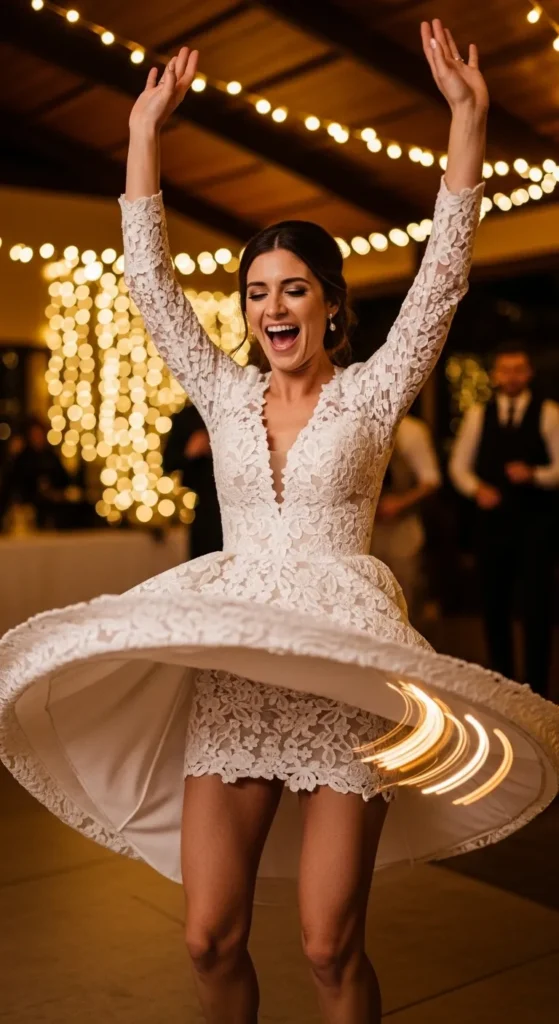
The wedding dress with detachable elements is the 2026 bridal trend that is simultaneously the most practically intelligent and the most creatively exciting — because it acknowledges something that many brides only discover after their wedding day: the perfect dress for the ceremony is not necessarily the perfect dress for the reception, and the perfect dress for the reception is not necessarily the perfect dress for the dancing at the end of the night.
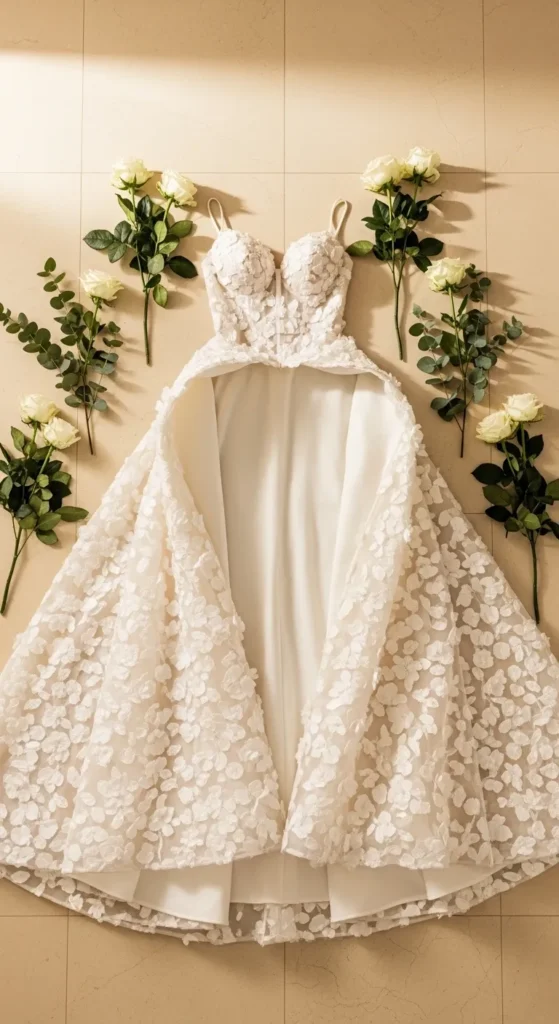
A detachable element — a removable overskirt, a separate train, detachable sleeves, or a removable cape — allows one investment in a single dress to serve multiple distinct moments of the wedding day with a different silhouette and a different visual story for each. The cathedral-trained ballgown that creates the most breathtaking entrance to the ceremony becomes an unencumbered reception dress when the train detaches. The formal gown with dramatic sleeves becomes a simpler, more relaxed dress when the sleeves are removed for dancing. The transformation takes minutes. The impact is complete.
What makes the detachable element trend particularly interesting in 2026 is the quality and the creativity of the design being applied to the detachable pieces themselves. These are not simply functional additions — they are often the most beautifully designed elements of the entire dress. A separate lace cape worn over a simple satin slip dress creates an extraordinary combination that is more dramatic and more beautiful than any single garment approach could achieve. The detachment of the cape does not diminish the dress — it reveals a completely different version of it.
The timing of the detachment is the detail that requires the most planning. The transition from one version of the dress to another needs to be built into the wedding day timeline — there needs to be a private moment, ideally with trusted help, where the transformation can happen comfortably and without rushing. A transition that happens quickly and calmly produces the most beautiful result when the bride re-enters the reception in her new silhouette.
What to look for: Detachable elements that attach and detach with complete security and complete ease. The attachment mechanism — whether hooks, buttons, ties, or snaps — should be both invisible when attached and simple to operate. Test the detachment yourself during your fitting appointments. If it requires significant assistance or significant time, the mechanism needs refinement before the wedding day.
6. Floral Embellishment in Three Dimensions
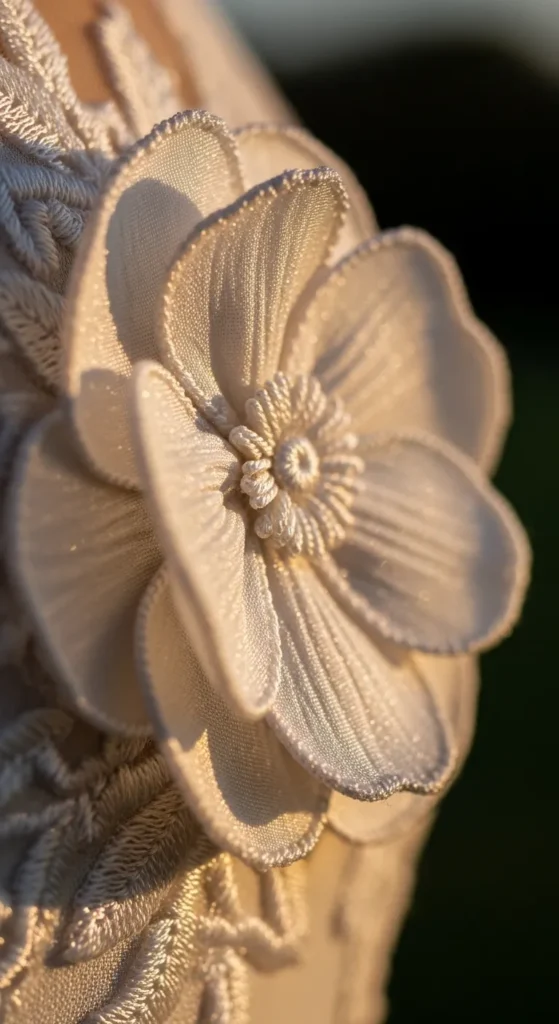
Three-dimensional floral embellishment is the 2026 bridal trend that most completely blurs the line between fashion and fine art — and when it is executed with genuine skill and genuine artistry, the result is a wedding dress that produces photographs of an almost impossible beauty. The flowers are not printed on the fabric. They are not embroidered into it. They exist on the surface of the dress as individual, physical, sculptural objects — each petal formed and placed by hand, the overall effect creating a dress that appears to be growing rather than constructed.
The specific visual quality that three-dimensional floral embellishment creates in natural light is unlike anything else in bridal fashion. Each individual flower casts its own tiny shadow on the fabric beneath it. Each petal catches light at a different angle. The overall effect is a surface of extraordinary depth and complexity that changes constantly as the light and the viewing angle change — photographing differently in every image and looking increasingly beautiful the longer it is examined. This is the wedding dress you look at in photographs ten years later and still discover new details you had not noticed before.
The connection between a dress with three-dimensional floral embellishment and a spring or outdoor ceremony is one of the most genuinely beautiful relationships in bridal fashion. The flowers on the dress participate in the natural world of the setting rather than being placed within it. A bride in a dress with three-dimensional botanical appliqué walking through a garden ceremony is one of the most extraordinary images that spring wedding photography produces — the flowers of the dress and the flowers of the setting in complete, magical harmony.
The practical care requirement for three-dimensional floral embellishment is more demanding than for flat-surface bridal details — and understanding this before purchasing is important. The dimensional flowers are vulnerable to crushing during storage and transportation. The dress should be stored flat, not on a hanger, and transported in a specialist bridal garment bag with tissue paper protecting the embellishment. This is a dress that requires care — but the care is entirely justified by the beauty of what it protects.
What to look for: Three-dimensional floral embellishment that is secured with genuine care and genuine skill — individual flowers that are firmly attached and that hold their shape under gentle examination. The underside of each appliqué flower should be cleanly finished. The placement of the flowers across the dress should feel intentional rather than random — a botanical logic to the arrangement that makes the dress look like it grew rather than was decorated.
Find elegant inspiration in 15 Glamorous Wedding Dresses for Your Dream Day.
7. The Micro Wedding Dress
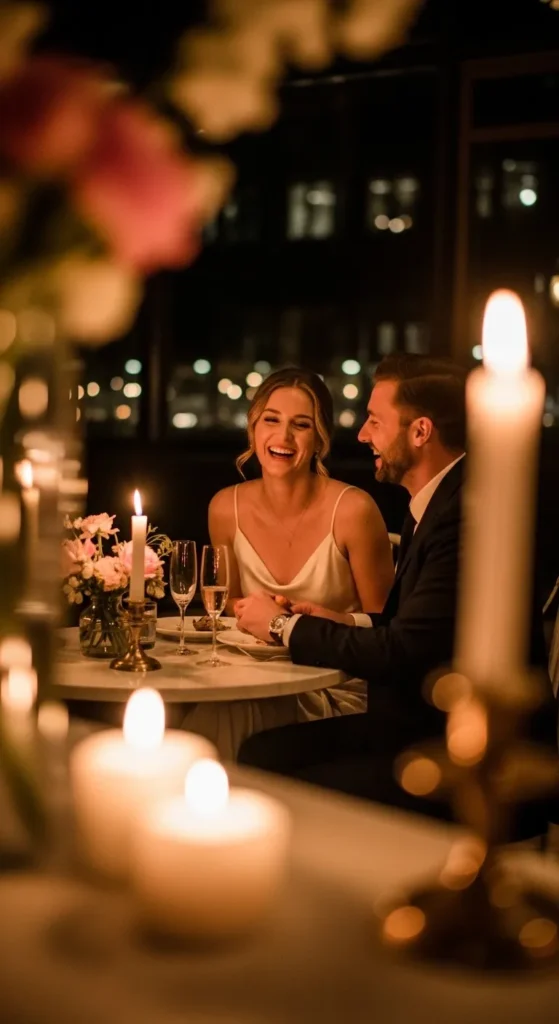
The micro wedding dress is the 2026 bridal trend that most directly reflects how a significant number of couples have chosen to approach their wedding day — with intimacy, intention, and a complete prioritisation of genuine meaning over grand spectacle. And as micro ceremonies have become not simply a practical choice but a deeply considered and deeply valued one, the dress designed specifically for this context has emerged as one of the most interesting and most genuinely creative spaces in contemporary bridal fashion.
A micro wedding dress is not simply a smaller or simpler version of a conventional wedding dress. It is a dress designed from the beginning with a specific kind of wedding in mind — a wedding where the emphasis is on the people rather than the production, where every detail is chosen with genuine care rather than convention, and where the bride wants to look and feel completely herself rather than dressed for a role. That specificity of purpose creates a completely different design brief from a grand ballroom gown — and the designers working in this space are responding with work of real originality and real personal expression.
What a micro wedding dress prioritises is comfort, wearability, and genuine personal expression — and the best examples do all three simultaneously without any compromise on beauty. A beautifully cut simple dress in a quality fabric that fits perfectly and allows the bride to move freely through an intimate celebration is genuinely more beautiful, in context, than a grand gown that restricts her movement and demands management throughout the day. The dress that serves the wedding serves the bride — and a micro wedding dress is designed to serve her completely.
The aesthetic range within micro wedding dresses is broader than most brides expect — because the removal of grand formal conventions opens up a creative space that conventional bridal design does not fully occupy. A silk slip dress with a meaningful detail at the hem. A beautifully tailored linen dress in warm ivory. A simple crepe dress with a single extraordinary sleeve. A vintage-inspired tea-length dress with personal embroidery. All of these are micro wedding dress options — all of them beautiful, all of them genuinely personal, none of them a compromise.
What to look for: A micro wedding dress should pass a specific practical test: can the bride wear it for six to eight hours, move freely through every activity of an intimate celebration, and feel genuinely comfortable throughout — not just in the first hour but in the last? If the answer is yes and the dress is beautiful and personal, it is the right dress.
Explore luxurious textures in 10 Stunning Satin Wedding Dresses to Inspire You.
8. Non-White Colour Palettes
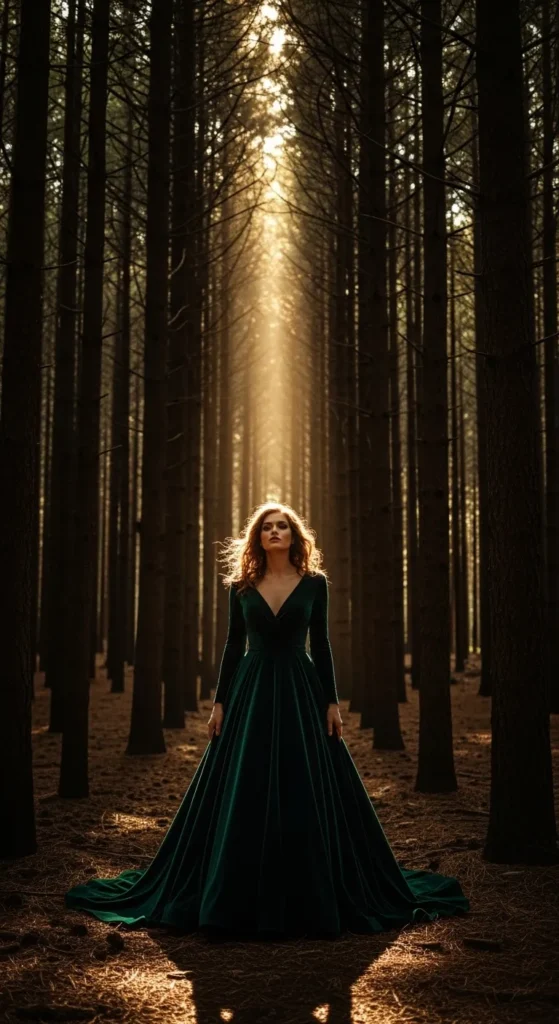
The expansion of bridal colour beyond ivory and white is one of the most culturally significant and most personally liberating wedding dress trends of 2026 — and it is being driven by brides who have thought carefully about what they want their dress to communicate and arrived at the conclusion that the answer is not simply tradition.
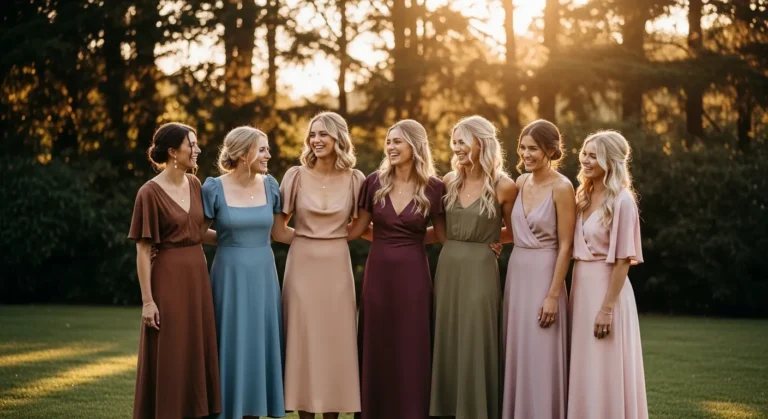
The range of non-white bridal colours appearing in mainstream collections in 2026 is broader and more varied than any previous moment in the industry’s history. Soft blush pink that photographs with a warm, romantic luminosity. Pale sage green that catches natural light with a freshness and a naturalness that feels completely spring-appropriate. Warm champagne that sits between white and gold and creates a quality of luxurious warmth that plain ivory does not have. Dusty rose that feels simultaneously feminine and sophisticated. Deep ivory with a warmth that most stark whites lack. And more dramatic choices — a soft blue, a warm caramel, even a pale lavender — for the bride whose personal aesthetic lives firmly outside conventional bridal territory.
What makes a non-white wedding dress genuinely beautiful rather than simply unconventional is the quality of the fit between the colour and the specific bride wearing it. A warm blush on a bride with warm undertones in her skin photographs with a radiance that a stark white cannot produce in the same skin tone context. A pale sage on a bride whose aesthetic is genuinely botanical and natural feels more completely right than any conventional bridal white would. The colour should feel like it was chosen specifically for this person — not because it breaks convention but because it is genuinely, specifically the most beautiful choice for her.
The most important practical consideration for a non-white wedding dress is the photography — specifically, how the colour photographs in the specific lighting conditions of the ceremony and reception venues. Different colours respond to different light sources differently — what looks beautiful in a flooded-with-natural-light boutique fitting room may look completely different in the low, warm artificial light of an evening reception venue. Testing the dress in conditions similar to the actual wedding lighting before committing is the genuinely practical advice that most brides do not receive.
What to look for: A non-white bridal colour that feels genuinely connected to the bride’s personal aesthetic rather than chosen simply for novelty. The colour should feel like the most natural and the most personal choice — not the most unusual one. When a non-white bridal colour is right, the bride should feel more completely herself in it than in any conventional white alternative. That feeling of recognition is the signal that the colour is correct.
9. The Statement Back
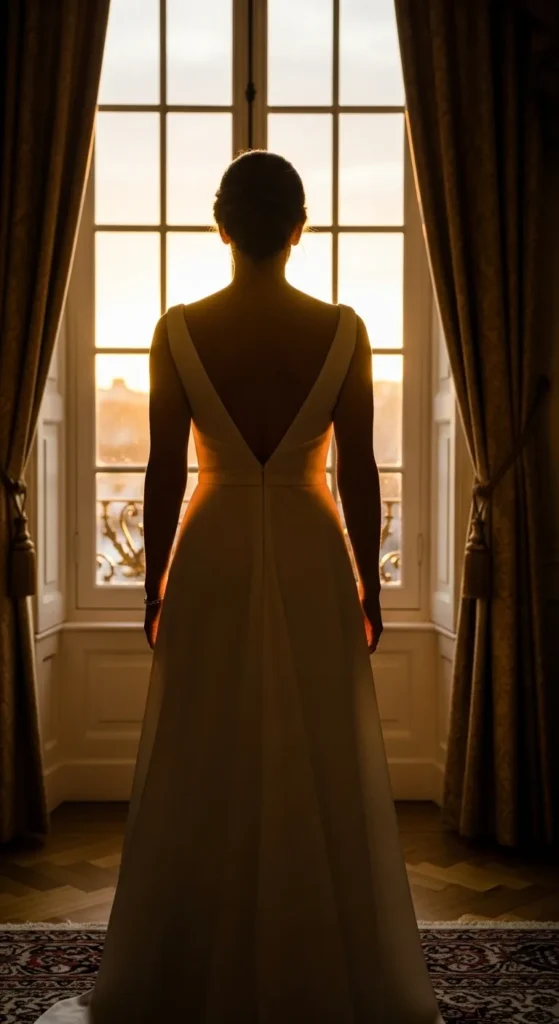
The statement back is the 2026 wedding dress detail that most brides underestimate before their wedding day and most brides consider the most extraordinary detail of their dress after it. The reason is simple: the ceremony. Every guest in the ceremony space spends the majority of the ceremony looking at the back of the bride’s dress — from the moment she walks down the aisle to the moment she and her partner face each other at the altar. The back is the primary view. A statement back is not a surprise detail. It is the main event.
A deeply beautiful back — a low open back with delicate button closures down the spine, an intricate lace-up corset back with structured boning visible through the lacings, a dramatic V-back that reveals the full length of the spine, a bow detail at the neckline that creates a sculptural, architectural element from behind, or a cutout design that reveals specific parts of the back in a considered and beautiful arrangement — creates the most consistently extraordinary and the most consistently photographed moment in a bridal day.
The reason statement backs work so powerfully in bridal fashion is the narrative they create. A bride who appears elegant and classic from the front — a simple neckline, a clean bodice, a conventional silhouette — who reveals something extraordinary when she turns creates one of the most genuinely dramatic moments available in the entire visual story of a wedding day. The ceremony photographs from behind are the images that most consistently produce the gasped reaction in the post-wedding viewing. Those photographs are of the statement back.
Hair decisions are the most critically important practical consideration for a bride with a statement back — more critical, in some cases, than any other styling decision of the day. The statement back needs to be completely visible throughout the ceremony. Any hair that falls across the back obscures the detail that is the dress’s most significant design element. An updo, a swept-aside style, or any arrangement that keeps the neck and back completely clear is the only hair decision that serves a statement back dress correctly.
What to look for: A statement back detail that is as beautifully finished on close examination as it is dramatic from across a ceremony space. The construction details of a back — the finishing of the edges, the precision of any button loops, the clean lining of any cutout edges — are visible in close-range ceremony photographs and in detail shots. The back should reward close examination as richly as it rewards the view from across the aisle.
10. Wedding Dress Trends: Personalised and Bespoke Details
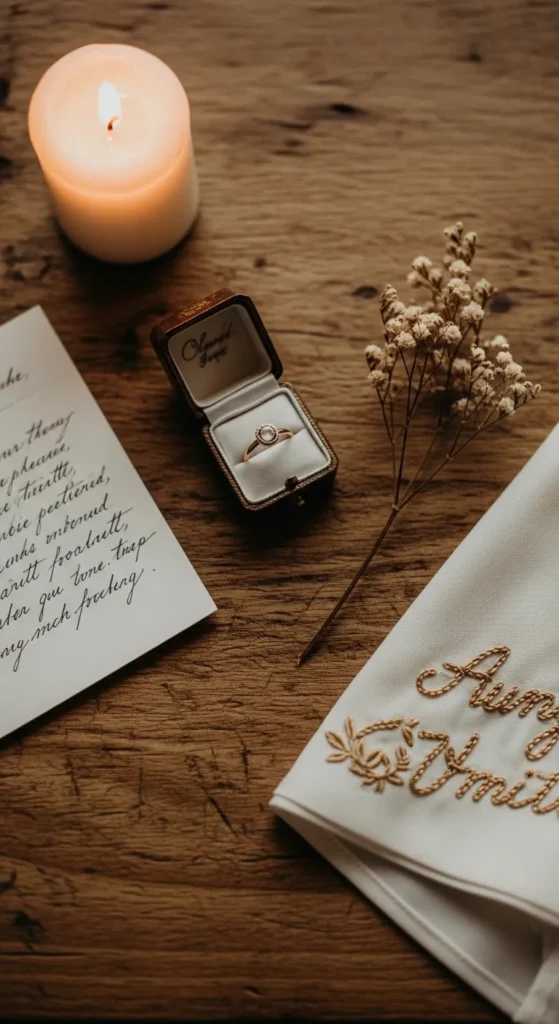
The most significant and the most meaningful wedding dress trend of 2026 is not a silhouette or a fabric or an embellishment technique. It is a philosophy — the movement toward genuinely personalised, genuinely bespoke details that transform a wedding dress from a beautiful garment into a genuinely irreplaceable object. An object that carries the specific story of a specific person, containing within its construction the evidence of care and intention that no purely purchased dress can contain.
What personalised wedding dress details actually look like in practice is as varied as the individuals who choose them. A grandmother’s lace incorporated into a new bodice design — carrying the history of another woman’s wedding into a new one. The wedding date embroidered in the bride’s mother’s handwriting inside the hem — visible only to the bride throughout the day, a private connection carried in the most intimate part of the dress. A motif — a flower significant to the relationship, a design from the partner’s cultural heritage, an image from the location of a meaningful moment — worked in embroidery into the bodice or the train. A hidden message from the partner sewn into the lining — discovered on the morning of the wedding, read in the most private possible moment.
These details change the relationship between the bride and her dress fundamentally — and they change the relationship between the dress and time. A wedding dress with a personalised detail is not simply a dress worn on a specific day. It is an object that will be looked at and touched and explained for the rest of the life of the person who wore it. The detail is the story. The story is irreplaceable.
The practical advice for brides pursuing personalised details is to begin the conversation with the designer as early as possible — ideally at the first meeting rather than as a later addition to the process. The most beautiful personalised details require time for planning, sourcing if they involve incorporating existing fabric or materials, and the skilled craftsmanship that cannot be rushed. A personalised detail added at the last minute is never as beautiful as one that was part of the design conversation from the beginning.What to look for: A bridal designer who responds to the idea of personalisation with genuine interest and genuine engagement rather than treating it as a complication or an afterthought. The designers who do personalisation best are the ones who understand that a wedding dress is not a product. It is a collaboration between a designer and a specific human being on the occasion of the most significant day of that person’s life. That understanding produces genuinely beautiful and genuinely meaningful personalised details. Its absence produces something technically accomplished but emotionally empty.
Final Thoughts
These 10 trends give you a map — but the territory is your own. Every bride who has ever found the right dress has described the experience in the same way: not as discovering a trend or following a direction but as recognising something. A feeling of complete certainty. A sense that this particular combination of fabric and cut and detail and silhouette is the one that is specifically, irreplaceably hers.
That recognition does not come from knowing the trends. It comes from knowing yourself — your aesthetic, your values, your vision for your day, and the version of yourself you most want to be present in the photographs you will look at for the rest of your life. The trends help you understand what is available and what the most skilled designers are doing with it. The recognition is yours.
Walk into your appointments informed. Approach them with genuine openness — the dress that is right for you may be one you would never have chosen from a photograph. Ask questions. Try things you would not normally choose. Trust the feeling when it comes.
It will come. And when it does, you will know immediately. That is how it works. That is how it has always worked. And no amount of trend knowledge changes that — it simply helps you find your way to the moment more quickly, more confidently, and more joyfully.